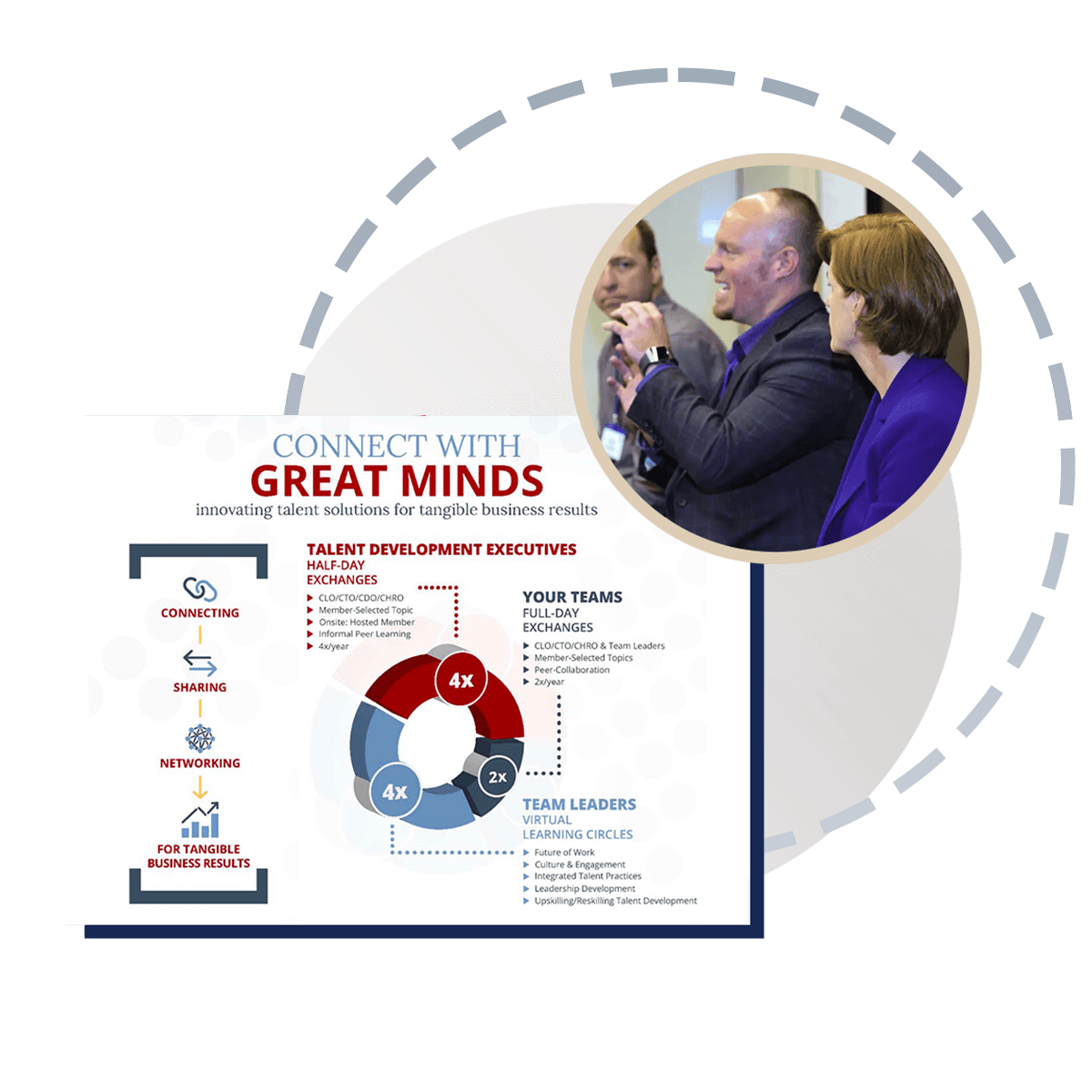
This highlight video is from the September 17, 2026 live discussion Design Charrette | New Managers in Luxury Retail, Promoted to Lead and Left to Figure It Out
"The vehicle that they're gonna drive is like a 18-wheeler with about 600 million pounds in the trailer." — Kyle Swanson
New managers are being handed a bigger vehicle with no new training. People leaders in this community working discussion kept circling the same real work: high-performing individual contributors get promoted into leadership, and the org that promoted them offers little more than a checklist and good intentions. It matters right now because the training runway behind new managers has gotten shorter, not longer, right as they're absorbing AI-accelerated complexity on top of the job — and the gap is where turnover, disengagement, and burnout start.
People shaping the work
Nicole DeFalco facilitated, opening with a poll that set the tone: most of the room had been left to figure out management on their own. From there, the real work came from the group — John Murphy named the training gap directly, Kyle Swanson brought both the 18-wheeler metaphor and his own story of being handed a classroom (and later a team) with zero prep, Marty Murrillo and Paul DeSousa pushed on onboarding and selection criteria, Adrienne Guerrero and Ali Glaser surfaced the identity-shift and culture ripple effects, Jason Aydelott and Gretchen Hartke checked what actually holds up once the training ends, and Lydia O'Malley pulled the group's early ideas back down to something teams could realistically build into existing routines. Dirk Tussing added a reflection on how much manager-training investment has shrunk over the decades. Baryons — the AI co-facilitator ELE ran alongside the group — listened throughout and turned the room's thinking into a from-to statement and a 30/60/90 plan live, in real time.
Promote for leadership, not just output
"We promote people to managers, and then we train them on operations." — John Murphy
The group kept landing here: selection criteria reward technical skill, sales numbers, or popularity — not demonstrated leadership ability. If leadership readiness isn't part of the promotion decision, it can't be missing from the training after.
Delegation is where the gap turns visible
"New managers have become a bottleneck because they have the inability to delegate." — Jason Aydelott
New managers default to redoing the work themselves — not because they can't let go, but because trust was never named as a shared language on the team. Kyle Swanson's framework: trust is credibility, reliability, and care. When a manager hesitates to delegate, that's usually a signal about one of those three, not a character flaw.
Reinforce the identity shift, don't just train it
Moving from "top individual contributor" to "capacity builder" — sometimes leading people who were peers yesterday — is an identity shift, not a skills class. It needs a rhythm: recurring check-ins, peer coaching, and routines that get reinforced after the training ends, not a one-time event experience that's over by Monday.
"The second thing was the biggest inhibitor to delegation is trust." — Kyle Swanson
What to try next
Quick moves to test this week:
- Ask one stuck-point question. In your next 1:1, ask a new manager directly: "What's making you hesitate to delegate right now?" One conversation, no new meeting. Early evidence: you'll hear the real blocker, not a polished update.
- Flag one promotion decision. In your next talent review, name one open req where you're weighing current-role performance over leadership readiness — out loud, to the room. Early evidence: the room either agrees fast or reveals how deep the habit runs.
- Audit one meeting for a rhythm. Find five minutes in your next team meeting where a trust check or peer share could fit without adding anything new to the calendar. Early evidence: you'll know within one meeting whether it's a fit.
30/60/90-day commitments from the discussion
- 30 days: Schedule one 15-minute check-in with each direct report specifically to ask where they feel stuck and what resources they need to succeed.
- 60 days: Introduce a 5-minute trust check at the start of team meetings to discuss how delegation is working and where shared language can clarify priorities.
- 90 days: Dedicate one team meeting per month to a peer learning session where managers share one leadership challenge they faced and how they navigated the identity shift.
Bring your version of this into ELE
Unprepared new managers, neglected leadership transitions, and operational execution pressures are being layered onto newly promoted star performers — and high-potential talent is left to figure it out alone through trial and error while organizations risk burnout, disengagement, and lost team productivity. This is exactly the kind of real work your team is struggling to move forward — and it's exactly what the ELE community works through together.
Shape what gets on the calendar. Submit your challenge, then vote for the ones worth solving first.
Submit Your Challenge: https://www.ele.llc/calendar/submit
Vote for what matters most: https://www.ele.llc/calendar/vote