What People Leaders Ask

How ELE helps you move real work forwardโ€”and how to find your place in the community.

frequently asked questions

ELE advances leadership development in the flow of work through ongoing community-powered reflection and exploration.

People leaders bring real talent challenges and strategic questions, compare perspectives across organizations, and explore practical ways to create business value. Over time, these conversations develop judgment and relationships people can turn to as their work changes.

Your hardest talent challenge. A community behind you.
The work you are already navigating becomes the starting point for development. People contribute experience, ask questions, challenge assumptions, and explore choices together.

The value builds across conversations. Someone elseโ€™s perspective can help you simplify a complex issue; your experience can help them see a different possibility. Relationships deepen through that exchange, sometimes over decades.

People come with a talent challenge. They stay for trust, belonging, growth, and the opportunity to help others.

Start with the outcome you need to achieve. Then explore what is helping or getting in the wayโ€”and what could change.

Peers can help you clarify a decision, examine tradeoffs, identify a capability gap, or shape a practical experiment. You take that thinking back to your organization and judge its value through what changes in the work.

The value might be a better decision, time recovered, stronger execution, reduced risk, or people better prepared for changing responsibilities. ELE helps develop the thinking and relationships behind those outcomes; results depend on what people put into practice.

You develop while working through issues that already need your attention.

Listening surfaces signals. Reflection helps you question assumptions and simplify complexity. Exploration opens possibilities for reimagining work and making practical choices.

You practice judgment, collaboration, and leadership through the conversationโ€”and bring useful questions and next moves back to work.

ELE is for people leaders who want to develop themselves and others while moving meaningful work forward.

The community brings together perspectives from HR business partnering, talent management, learning and development, organizational effectiveness, business leadership, and related work.

Curiosity, relevant experience, and a willingness to help others matter. You do not need to have all the answers.

No. Listening is participation.

You can hear how others approach an issue, reflect on what applies to your work, and contribute when you are ready. A thoughtful question or a different perspective can be valuable; you do not need a polished answer.

You are never required to disclose sensitive work details.

Trust grows when people listen respectfully, contribute thoughtfully, and see one another again over time.

Share only what you are comfortable discussing. Describe situations without identifying details when appropriate, and respect the context in which others share their experience.

For recorded conversations, check what will be captured and shared so you can choose what youโ€™re comfortable contributing.

People from solution-provider organizations can contribute relevant experience and perspectives as peers.

Participation should help the community think through the work. Unsolicited pitches and promotional messages undermine that exchange. Keep commercial conversations separate and pursue them when there is mutual interest.

People in the ELE community consistently point to the same things: the caliber of the peers, the depth of the conversations, and the practicality of what they take back with them.

Rather than surface networking or passive learning, people describe ELE as a place to think out loud with experienced leaders, test ideas, and work through real challenges togetherโ€”without sales agendas or performative talk.

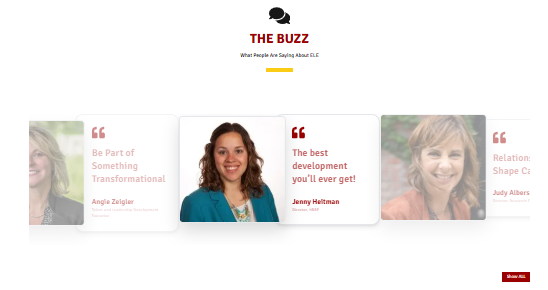
ELE is the best development youโ€™ll ever get!

You can see a snapshot of that feedback in THE BUZZ on our homepage, or explore deeper reflections from contributors across roles and organizations here:
Read community testimonials
https://www.ele.llc/testimonials

That shared experience gives leaders confidence to act when thereโ€™s no obvious playbook.

Start with what matters in your work.

Explore a Community Hub, listen to a relevant conversation, or browse ELE Insights. If an issue needs outside perspective, bring a talent challenge or propose a meetup.

You can also connect with the person who introduced you to ELE and ask where your experience or current interests might fit.

People propose conversations, share talent challenges, and vote on what deserves attention.

Listening Meetups and the Idea Exchange also surface recurring questions and emerging signals. Community Directors and ELE help turn those priorities into relevant conversations and working experiences.

The calendar develops from what people are noticing and trying to move forward.

A Listening Meetup is a conversation where people leaders compare what they are noticing in their work.

An informal exchange can reveal a recurring tension, challenge an assumption, or open a strategic question. What people hear together helps activate reflection and identify what the community should explore next.

It also gives relationships room to grow. You can participate by listening; you do not need to arrive with a challenge or leave with a formal action plan.

A Design Charrette is a focused working conversation around a real talent challenge.

Peers clarify the desired outcome, examine signals, question assumptions, and explore choices and tradeoffs. The Signals-to-Action Planning Worksheet helps capture that thinking and shape practical next moves.

A charrette typically runs 90 minutes. Where useful, the work includes 30/60/90-day commitments to test and review.

Yes. Submit a real talent challenge and request a complimentary Design Charrette.

ELE reviews the request, clarifies the challenge where needed, and confirms whether it can coordinate a suitable cross-industry working team. The purpose is to help you experience ELEโ€™s approach through work that matters to you.

It is a shared thinking tool for turning a complex talent challenge into a clearer conversation.

Start with the work and desired outcome. Capture what you are noticing, compare signals, examine strategic choices and risks, and identify opportunities to test.

You do not need to fill every box. What remains unclear may be the most useful place to begin a conversationโ€”with your leaders, your team, or ELE peers.

Open the Signals-to-Action Planning Worksheet

Bring an experience, ask a useful question, listen carefully, or help someone examine an assumption.

You can also suggest a conversation, facilitate an exchange, contribute to the Idea Exchange, or introduce people whose perspectives could help one another.

Contribution grows from your interests and capacity. A formal role is not required.

ELE Insights help you revisit the questions, perspectives, and practical approaches explored by the community.

Use them to prepare for a conversation, reflect on a decision, or find someone whose experience connects with your work. Consider the original context and date before applying an approach.

An insight post can become the beginning of another useful exchange.

ELE creates space to explore emerging signals before the path forward is obvious.

People leaders compare what is changing across organizations, question assumptions, and examine possibilities for their own work. The aim is to develop judgment and useful questionsโ€”not promise certainty about the future.

AI, skills-first talent strategy, reskilling, and high-performing teams are examples of work the community may explore as priorities emerge.

Start with the outcome. Reimagine the work. Then consider what to redesign, which capabilities to develop, and where people could contribute differently.

Peers help explore where AI expertise could improve the work and where human judgment remains essential. Development becomes connected to the value people need to create.

Use real work to guide the conversation rather than assuming the answer is another tool or training program.

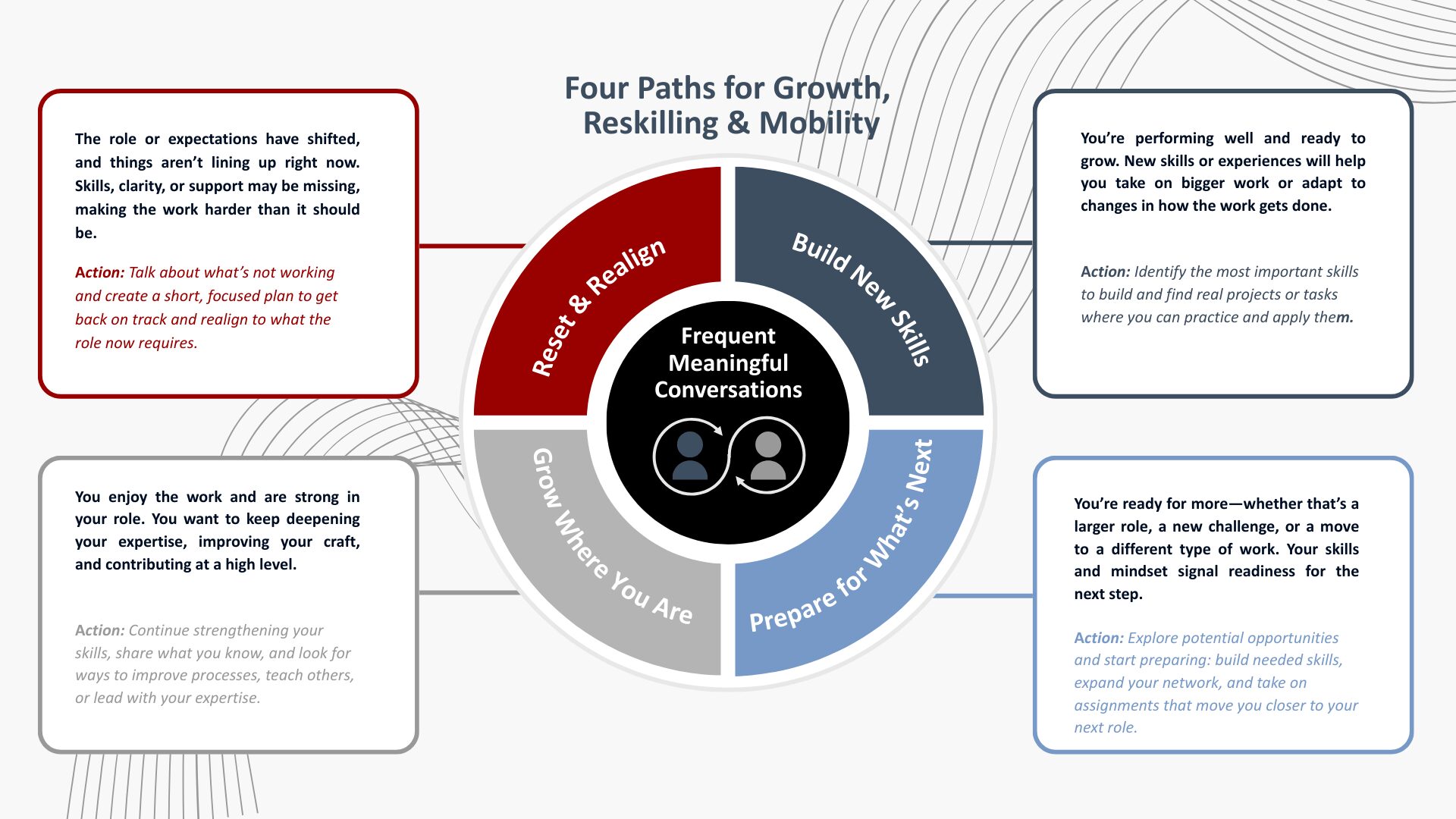
Four Paths for Reskilling

A Community Hub is a local think tank inside ELEโ€™s global community. People leaders who share a region, role, or area of work meet again and again around the talent challenges in front of them.

A hub is not a one-time event. Over time, people upskill, grow, and change how they lead. They learn to reframe problems, see other ways forward, and ask different questions. Listening to others is learning too.

Regional hubs grow from local relationships and context. Functional hubs, such as HR business partnering, connect people with related responsibilities across organizations.

Each hub is the local arm of ELEโ€™s think tank. Leaders put what they learn to work close to home and connect it with a global community.

A question raised in one hub often matters in another. Hubs draw on perspectives from across ELE, and what one hub learns reaches others through Insights and shared exchanges.

The community does. People share signals, propose questions, and add talent challenges at /calendar/shape.

The core team helps everyone compare priorities and choose what to explore together. ELE turns those choices into calendar listings and communications. A hubโ€™s direction grows with its people.

Every hub runs on a small core team with clear roles:

  • Community Director: leads the hub. Builds relationships, listens for emerging issues, and develops others to share leadership.
  • Primary ELE Producer: partners with the Director on the quality and flow of every exchange. Depending on the hub, an ELE producer or a local producer trained by ELE.
  • Co-directors, each with a defined role:
    • Calendar Manager: turns the communityโ€™s priorities into a steady rhythm of Listening Meetups, Design Charrettes, and AI Working Labs.
    • Community Relationships Manager: welcomes new people, makes introductions, invites people to add testimonials to their ELEfolios, and keeps the hub connected. Testimonials tagged to the hub appear on its hub page and in The Buzz on the home page, so the hubโ€™s impact is visible.
    • Producers: host and facilitate individual exchanges.
    • Engagement Manager: keeps the conversation going between exchanges through the Idea Exchange, Insights, and follow-up on 30/60/90-day commitments.

ELE handles registration, marketing across ELEโ€™s global community, and publishing Insights. That frees the core team to focus on local logistics, trusted relationships, and the work itself. Roles and support are agreed with each hub.

You grow while you help others grow.

  • Grow as a leader: leading a hub sharpens how you frame problems, guide choices, and ask better questions.
  • Be seen: your thinking reaches ELEโ€™s global community through your ELEfolio, Insights, and the exchanges you lead.
  • A network that shows up: the people you help become the people you can call on when you need it most.
  • Leave a legacy: you develop the next generation of leaders in your region and your field.

Start with the people and the work you care about. Introduce peers, propose a conversation, help facilitate an exchange, or step into a core team role.

Connect with a Director on the relevant hub page, or contact ELE. See also Help Shape ELE: Ambassadors and Community Directors.

Explore the Individual and Team plans, or ask whether your organization already has a plan you can use.

If someone in the community introduced you, their ELEfolio may offer a referral option. Follow the current registration instructions or contact ELE if you need help finding the right route.

A Team plan gives colleagues a way to connect ELE participation with shared talent priorities.

For example, colleagues might explore different perspectives on the same challenge, compare what they learn, and bring useful questions into their own leadership conversations. They can also contribute experience that helps the wider community.

Check the current plan details for access, pricing, and included benefits.

Use your ELE profile to review the communication preferences available to you. Keep your interests current so relevant conversations are easier to find.

Explore the calendar and Insights when useful, and follow the registration instructions for each experience.

ShareCopy