"We're giving people the most powerful tool of their careers — and rewarding them for using it the laziest way."
The real work on the table: Most organizations have already answered the easy question: are we using AI? The harder question — are our people using it well, and do they even know the difference? — is the one almost nobody is answering. For L&D and people leaders, defining what good AI use actually looks like is critical before cognitive atrophy, skill degradation, and gradual disempowerment quietly erode the human judgment organizations depend on.
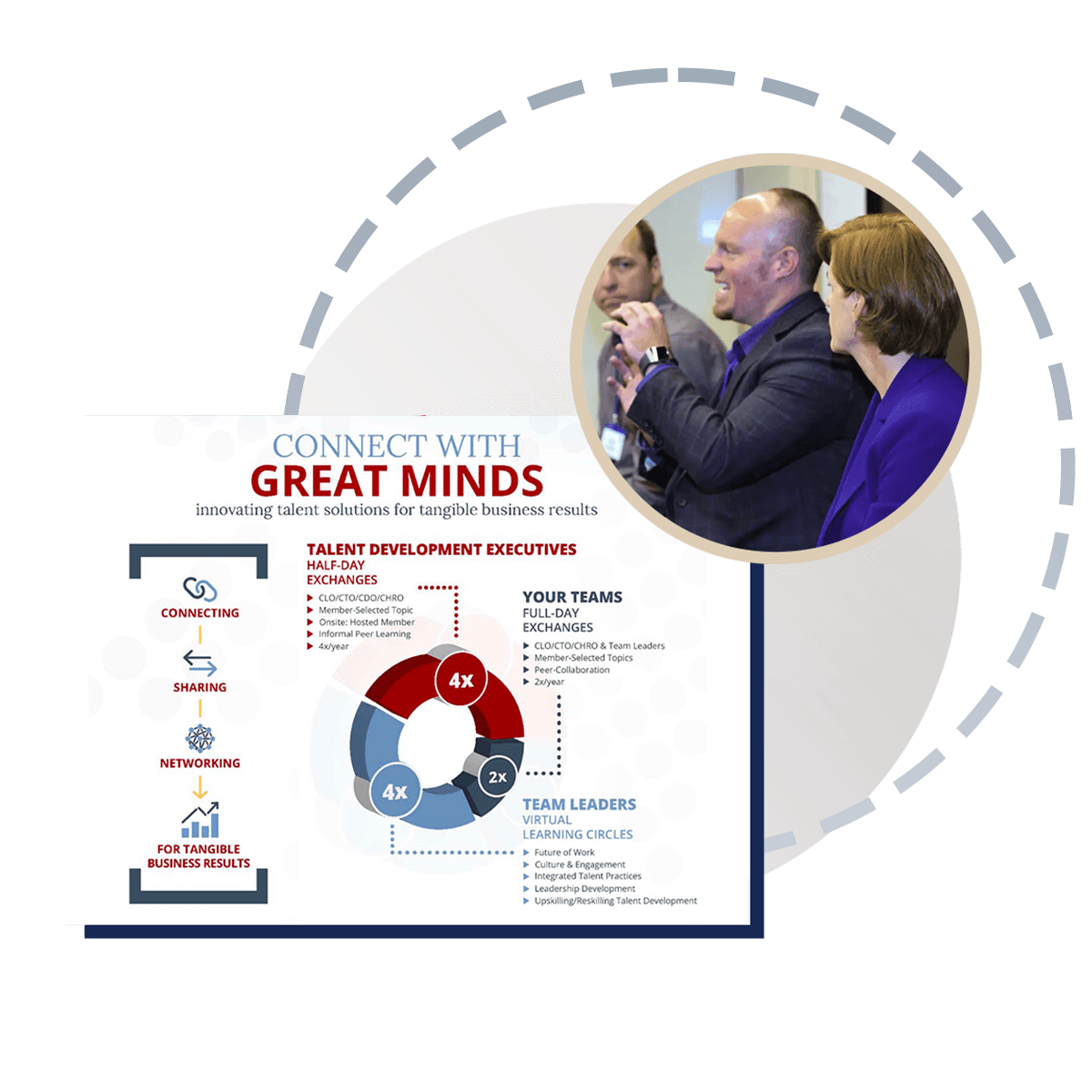
Who was in the room: This working exchange brought together L&D executives, people leaders, and talent strategists from across the ELE community — professionals actively navigating enterprise AI licenses, workforce capability questions, and the pressure to show ROI on tools their teams may or may not be using well.
The system is rewarding the wrong thing
"That was not a tech failure. It was a structural failure."
The easy button problem isn't a discipline problem. It's a design problem. At most organizations, the professional who uses AI carelessly outperforms the one who uses it carefully — at least on the metrics that currently get measured: license usage, login rates, output volume, and speed.
When the system rewards the easy button, people press it. That's not laziness. That's the system working exactly as designed — toward the wrong outcome. Until L&D leaders redefine what gets measured, training alone won't change behavior. The incentive structure has to change first.
What erodes when we stop doing the hard thinking
"Higher confidence in AI correlated with less critical thinking."
Three peer-reviewed studies surfaced during the working exchange aren't reassuring. MIT showed measurable cognitive debt in writers using AI, including memory retention issues and a reduced ability to integrate personal understanding with completed work. The Lancet tracked endoscopists using AI assistance for three months and found measurable skill degradation after tools were removed. Microsoft and Carnegie Mellon found that higher confidence in AI correlated directly with less critical thinking. This is the research backdrop behind the eight capacities of human agency — identifying what AI structurally cannot replace, but can degrade through disuse.
The two capacities L&D must protect
"When we give away our critical decision-making, we give away more than we realize."
Two of the eight capacities are especially at risk, and especially relevant to the clarity and confidence people leaders need to act well in an AI-assisted environment:
The Weight Bearer is the human capacity to have skin in the game — to feel the stakes because your name is on the work. When people hand AI their ideation, structure, and key decisions, they don't just save time. They quietly surrender the ownership instinct that makes their work credible and defensible.
The Course Corrector is the meta-capacity: noticing when something is off and doing something about it. It's the capacity that catches AI's errors before they ship. It's also the one most directly degraded by over-reliance on the easy button.
Both capacities are skills. They're built through use and eroded through avoidance — which means L&D has direct leverage over whether they survive AI adoption or quietly disappear.
The investment gap hiding in plain sight
"Trained humans don't follow your AI strategy. They become it."
Boston Consulting Group's framework for AI investment suggests 70% should go to people and process, 20% to data architecture, and 10% to tools and algorithms. Most organizations have that ratio flipped. The distinction produces fundamentally different outcomes. Systems — policies, gates, validators — are necessary. They're the floor, but they only produce compliance. People — trained judgment, ownership, the ability to catch what AI gets wrong and reinvent what it can augment — produce capability. And capability compounds in ways compliance never will.
What to try next
- Ask the governance question this week. Find out whether your organization has a written, org-wide standard for what good AI use looks like — and who owns the answer. Early evidence: If three people give you three different answers, the gap is confirmed and you have the business case to close it.
- Add one qualitative signal to your AI measurement. Ask managers to include a "walk me through how you used AI on this" question in their next round of 1:1s — before reviewing the output. Early evidence: If people struggle to explain their process or can't identify what they changed, the Weight Bearer and Course Corrector capacities are already at risk on your team.
- Map your AI investment ratio against the BCG framework. Make a rough honest estimate: what percentage of your current AI spend is going to systems versus people development? Early evidence: If the ratio is inverted — heavy on tools and compliance, light on trained judgment — that number becomes the opening line of your next budget conversation.
Bring your work into the room
If this connects to real work you are trying to move forward, bring it into the ELE community. Share the challenge, compare signals with trusted peers, and leave with practical next moves you can use.
Submit My Challenge Now: https://www.ele.llc/faqs/share-top-of-mind-talent-challenges