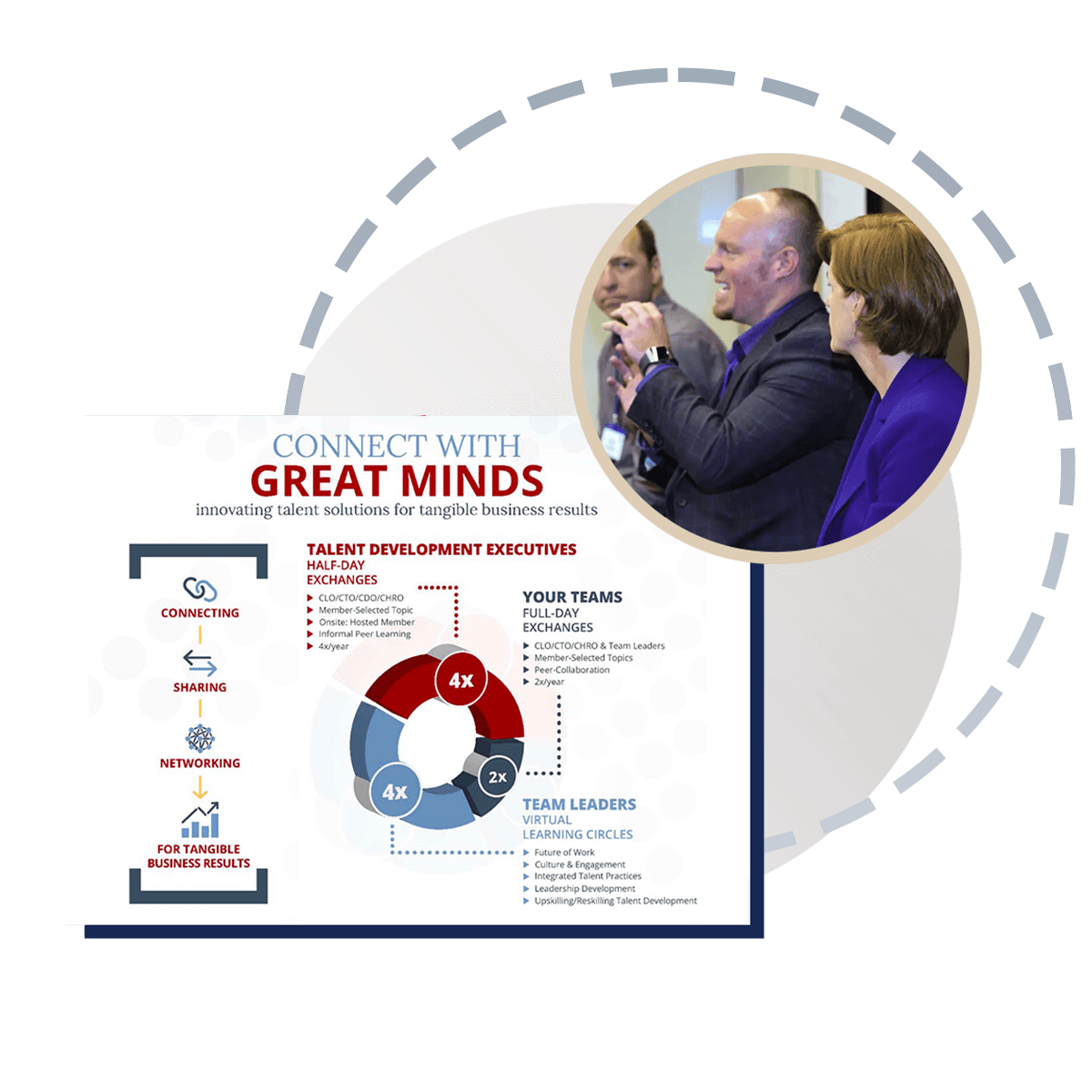
This highlight video is from January 16, 2026 session Co-Creating Human-Centered Transformation in the Age of AI
This real-time exchange surfaced a truth many talent leaders are quietly wrestling with: AI isn’t just changing how work gets done—it’s revealing whether our teams have the confidence, clarity, and shared judgment to learn together in the flow of work.
The conversation didn’t drift toward tools or training catalogs. Instead, it stayed grounded in what leaders are seeing inside their organizations right now: uncertainty, acceleration, and unspoken fear. As Michael named directly:
“Great leaders don’t hide fear. They help people face it together.” — Michael Kester, Lead Belay.
That idea reframed the role of talent leaders in this moment. Before teams can build new capabilities, leaders have to design spaces where fear is discussable—where learning isn’t confused with performance, and curiosity isn’t penalized.

From there, three insights stood out for leaders designing team-based learning experiences:
First, AI doesn’t fix weak systems—it exposes them. As Deepa put it:
“AI amplifies everything—structure and chaos.” — Deepa Kartha.
Teams aren’t struggling because they lack tools. They’re struggling where roles, decision rights, and ways of thinking were already unclear. AI simply makes that visible—fast.
Second, the capabilities that matter most aren’t new. In a moment that brought relief to many in the discussion, Nicole DeFalco reframed the skills conversation:
“The new skills aren’t new. They’re the ones we stopped practicing.” — Nicole DeFalco.
Critical thinking, sensemaking, and judgment are no longer “soft skills.” They are the infrastructure that allows AI to be useful rather than risky.
Third, clarity—not access—is the real gap. Nearly everyone has access to AI. Far fewer teams have shared norms for when to trust it, how to validate outputs, and when human judgment must lead.

The takeaway for talent leaders is clear: this isn’t about delivering more training or scaling content faster. It’s about designing experiences where teams practice thinking together—inside the work that actually matters.
Because in the age of AI, learning doesn’t live in programs.
It lives in the moments when leaders slow the work down just enough for teams to learn forward—together.