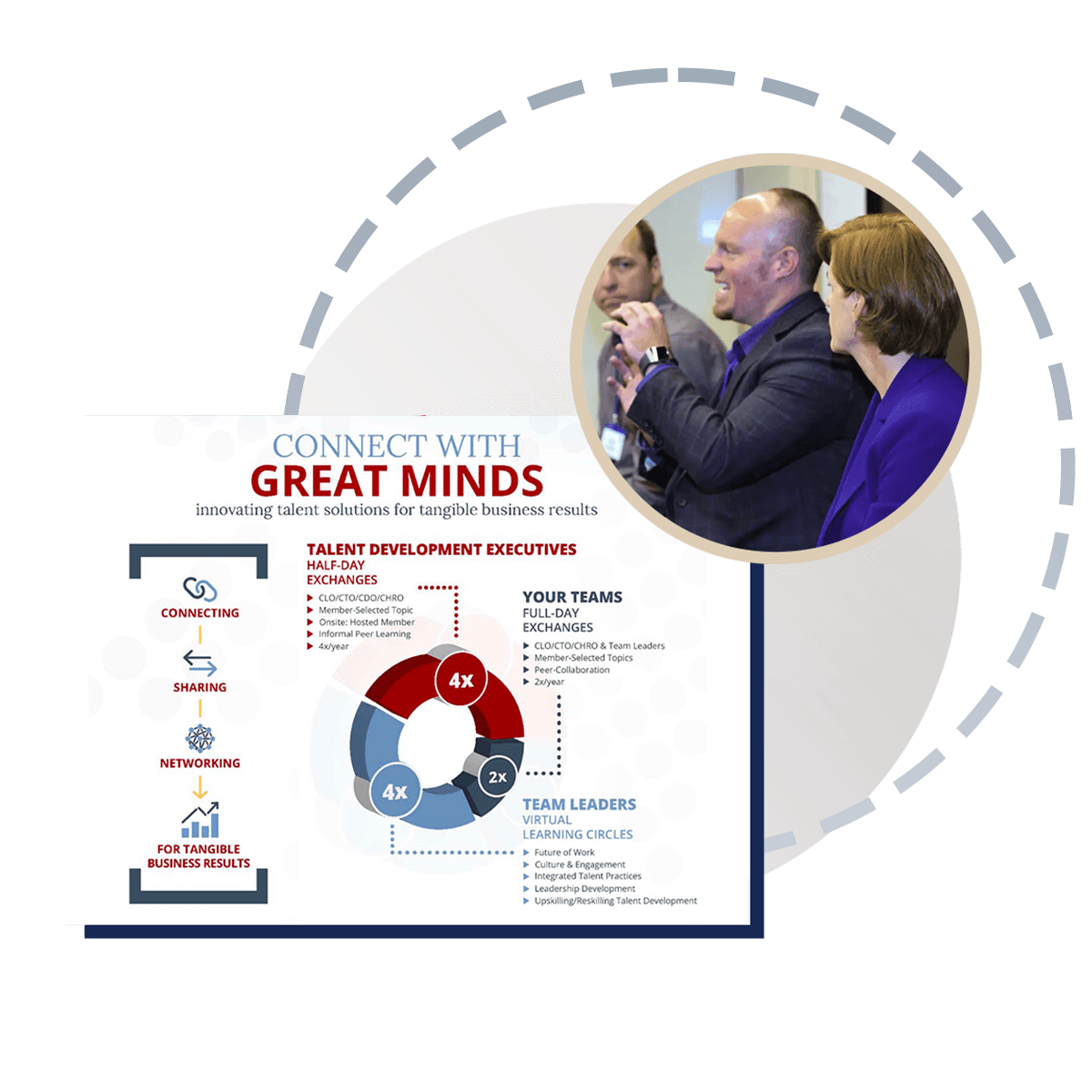
Session Focus: How Advocate Aurora Health provides essential skills for non-leadership roles to develop, gain resources, grow professionally, and extend their networks to strengthen them for their next promotion.
This session provided valuable insights into leveraging cohort-based programs to strengthen resilience, inclusivity, and sustained development among high-potential employees.
"The strength of a network can go up over time, even as skills might depreciate. Building that network in cohort formation is incredibly valuable." This quote from Alan Todd underscores the sustainable impact of network-building in talent development.
By connecting employees in meaningful, collaborative ways, cohort-based learning enables participants to grow within a network that reinforces retention and long-term engagement, helping your organization build a resilient workforce.
Key Takeaways for HR Talent Leaders:
1. Long-term Network Building and Sustainable Development
A well-structured cohort program offers lasting benefits by creating a supportive professional network. This network becomes a resource participants rely on for ongoing resilience, even as specific skills evolve or shift with industry needs.
2. Inclusion and Structure in Leadership Development
Designing cohort criteria with clear DEI goals, such as a diversity target, ensures a broad range of talent benefits from career growth opportunities. This intentional approach can transform your pipeline by embedding inclusivity into development and enabling underrepresented talent to access leadership pathways.
3. Empowering Mentors and Facilitators as Part of Their Development
Encouraging mentorship and facilitation as developmental opportunities can boost engagement among potential mentors. When framed as a professional growth tool, mentoring becomes a valuable skill for those who support the cohort, enriching their careers and strengthening their connection to the organization.
By focusing on these strategies, senior HR leaders can make cohort programs a cornerstone of a resilient, inclusive, and engaged workforce that’s well-prepared for future challenges.