While most talent and learning and development teams easily produce dashboards detailing completion rates, satisfaction scores, and training hours, these vanity metrics rarely answer executive leadership's core question: what actually changed in the business?
Demonstrating true organizational value requires moving beyond easy-to-report activity measures to directly connect learning initiatives with changes in employee behavior, decision-making, and performance outcomes. Shifting this narrative demands rigorous alignment between program design and tangible business results.
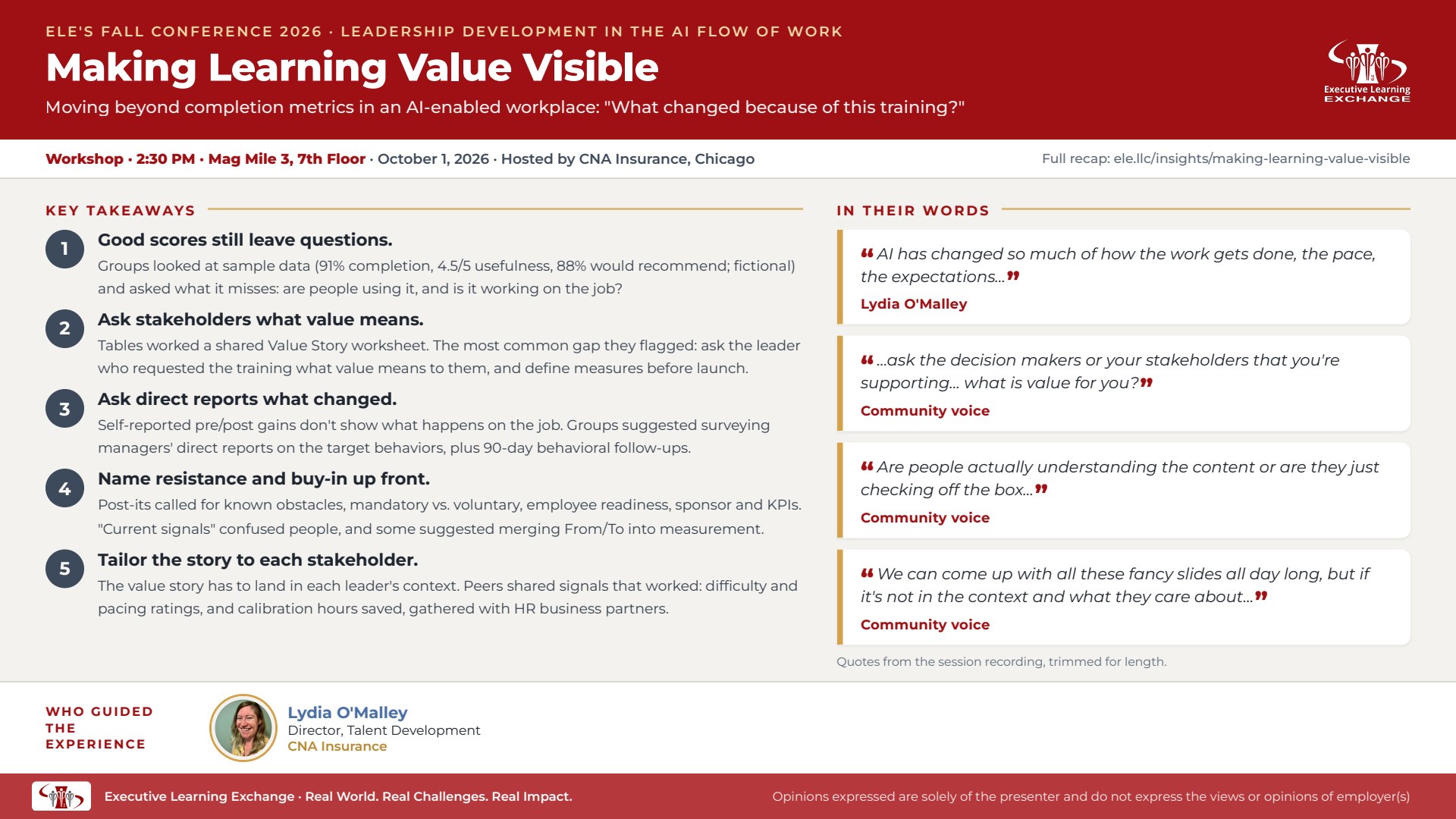
Facilitated by Lydia O'Malley, this workshop takes leaders through a draft value story worksheet so they can replace activity counts with evidence their executives can use.
What we heard
Groups ran live programs, from a sales capability rebuild to a heavily regulated compliance curriculum, through Lydia's draft value story worksheet and agreed that completion and satisfaction scores don't show what changed. Stronger evidence they named: pre- and post-assessments set before launch, behavior questions in 90-day follow-ups, surveys of participants' direct reports instead of self-ratings, and before-and-after time estimates gathered from HR business partners. The most common edit to the worksheet: start by asking the stakeholder who requested the training what value means to them.
"…we could do this all day long, especially now with AI, but what is value for you?"
Brady Bair
"…ask their directs, are you seeing this… I think we would get a stronger indicator if the program is a success."
Community voice