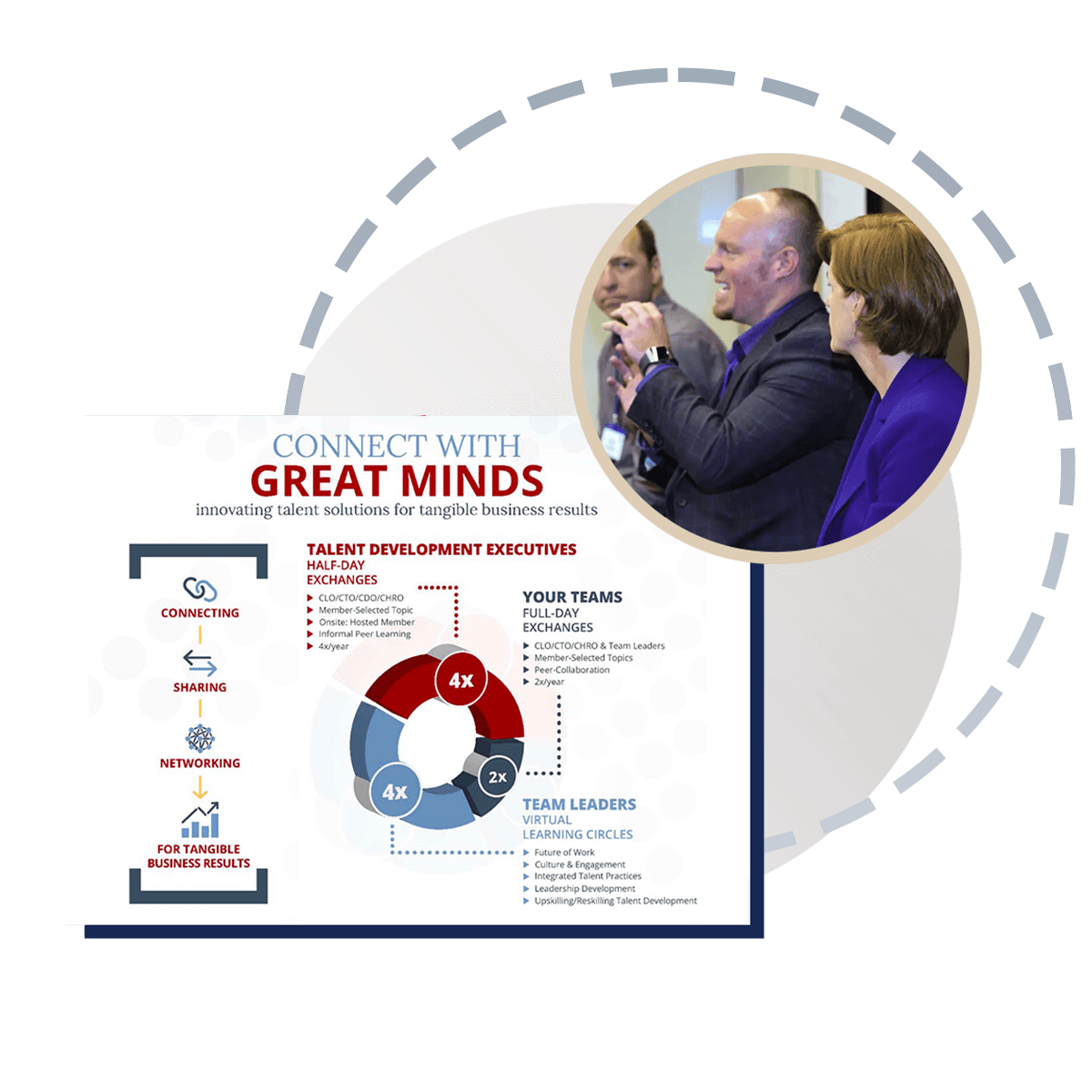
This highlight video is from February 27, 2026 live interactive discussion "Strategy & Change in Practice: Turning Uncertainty into Better Decisions".
When Aaron Olson keynoted in person at ELE’s October conference at Zurich North America (Schaumburg campus), he launched his new book Strategy & Change—and the room lit up because it wasn’t theory. It was usable.
So we invited him back for a live interactive workshop discussion on Feb 27, and he delivered again—this time with the group applying the ideas to real decisions, in real time.
In the simplest terms, Aaron’s message was this: stronger teams get better at avoiding blind spots → making clearer choices → naming risk early—because that’s where real opportunities get unmasked. He also walked through how to prepare yourself with a simple Action Planning Tool.
And the best part? The community didn’t just nod along—we sharpened the framework with the kind of reflections you only get when experienced leaders are willing to be honest about what actually happens inside organizations.
The takeaway that hit hardest: don’t outsource your judgment
As Marty Murrillo put it - especially with AI in the mix:
“You can’t… abdicate your critical thinking to a machine, nor should you ever give your voice to a person or a machine."
That line landed because it names a very real risk pattern: teams move faster, they generate more output… and leaders slowly stop owning judgment.
The point wasn’t “don’t use AI.” The point was: don’t give away your voice. When leaders do that—whether to a tool or to the loudest person in the room—capability erodes quietly.
Why “challenge” is the hidden lever in better decisions.
One reflection that really stuck with the group was how culture shapes decision quality—even before the decision starts. Rachel Kaberon named the blocker we all recognize when we’re being honest:
“The word challenge becomes a choice… that interpersonal exchange is part of the choice architecture."
That’s it. That’s the whole game. If challenging assumptions feels socially risky, people avoid it. If people avoid it, blind spots stay protected. And if blind spots stay protected, the “choice” is basically pre-decided—just with nicer language around it. So when we say “we need clarity,” what we often really mean is: we need a better room for real challenge.
Insight isn’t just “more data.” It’s sensing what others miss.
Jean Ryan added a strategic layer that sharpened the “Insight” part of Aaron’s framework: if you only listen to the loud, obvious signals, you’re already behind.
She described the power of going after weak signals—especially outside your industry—because they challenge your current assumptions before the change becomes unavoidable.
Strong signals are easy to spot. They’re already loud. Weak signals take intention. But that’s where the early advantage lives: noticing shifts in behavior, expectations, education, and adjacent markets before they turn into urgent problems. This is one of those leadership muscles that looks “soft”… until you realize it’s the difference between being prepared and being surprised.
What made this practical: a one-page tool teams can actually use
Here’s where Aaron made it actionable.
The Strategy & Change | Action Planning Worksheet is a practical tool for senior leaders because it turns the framework into a single page teams can work through together—in the flow of real decisions. (click here to download the editable worksheet)
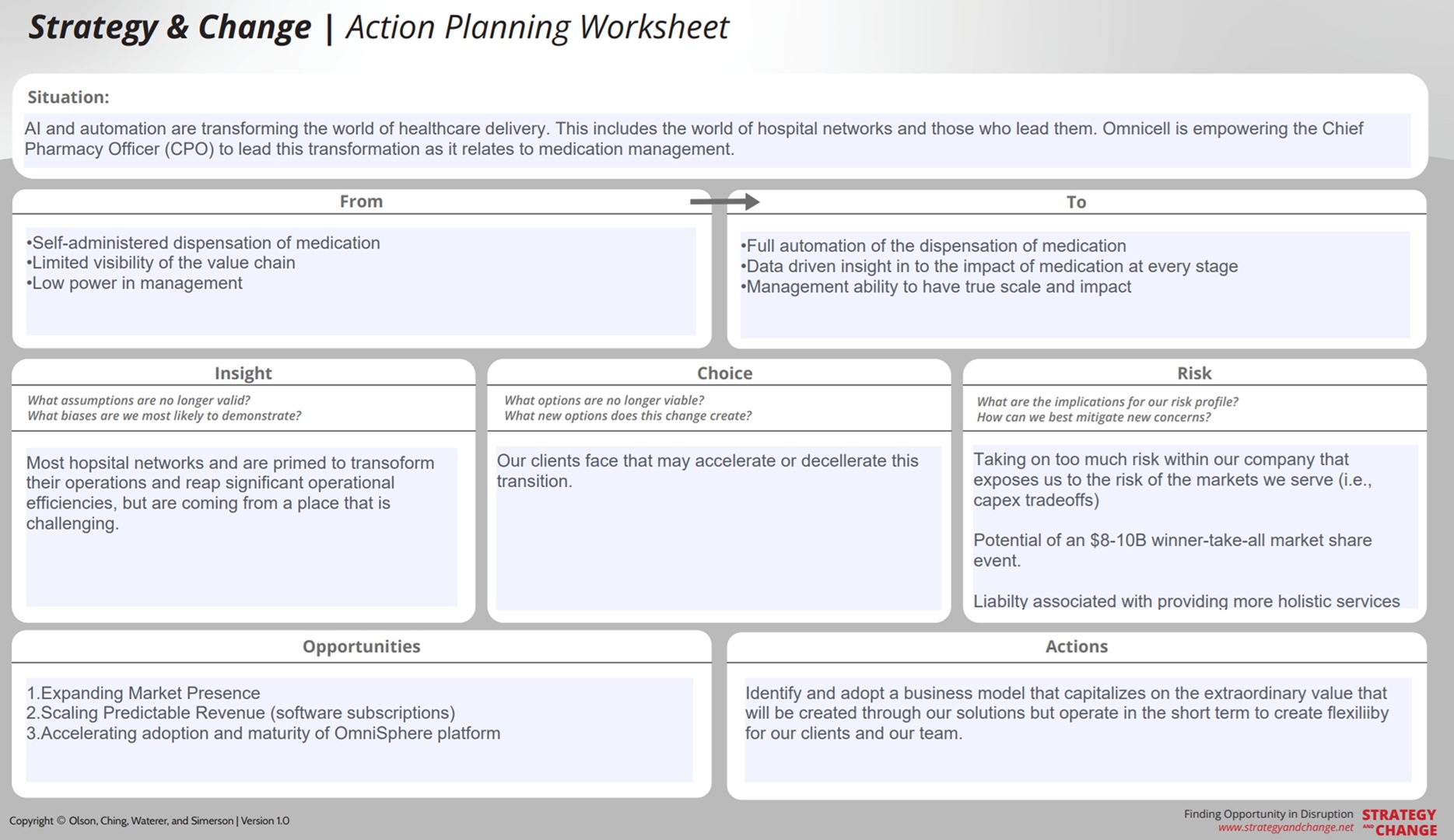
It helps teams:
- surface blind spots without turning it into a debate club
- clarify the real choice being made (and the tradeoffs)
- name risk early enough that it helps—not late enough that it hurts
And there’s a bigger reason we’re excited: Even better: this worksheet is the backbone for ELE’s next Design Charrette—because it forces the exact moves teams need to build Confidence, Capability, and Clarity while they’re solving something that actually matters.
Want to go deeper?
This mini-workshop draws on ideas from Strategy and Change by Aaron Olson and co-authors—focused on insight, choice, and risk when leaders face disruption.
- Explore the book on ELE’s Bookshelf (learn more or purchase)