Skills-based talent management has been a major investment area for years, yet many organizations are still struggling to show clear value from heavy enterprise architectures, complex taxonomies, and rigid proficiency models.
With rapid advancements in AI, technology decisions made just two years ago are already ripe for reconsideration. Rather than overengineering systems, leaders must rethink their architecture, technology, and starting point to keep skills data precise enough to trust, but nimble enough to maintain.
Led by Shweta Srivastava, Matt Donovan, Katie McAllister, Craig Friedman, and Matt Sernaker, this community-powered roundtable examines where real value is created, where initiatives get stuck, and how the classic 'buy, build, or borrow' talent strategy shifts as in-house AI evolves.
What we heard
Shweta described how Microsoft inferred skills from work signals instead of relying on self-reported profiles, and when redeployment became a priority, used that data with its job architecture to match people in eliminated roles to open ones. A mining company example made the case for small taxonomies built around one business goal, with AI translating between them instead of forcing one master taxonomy. Peers agreed to match validation to the stakes of the decision and to start with a specific business problem, not an enterprise talent marketplace launched for its own sake.
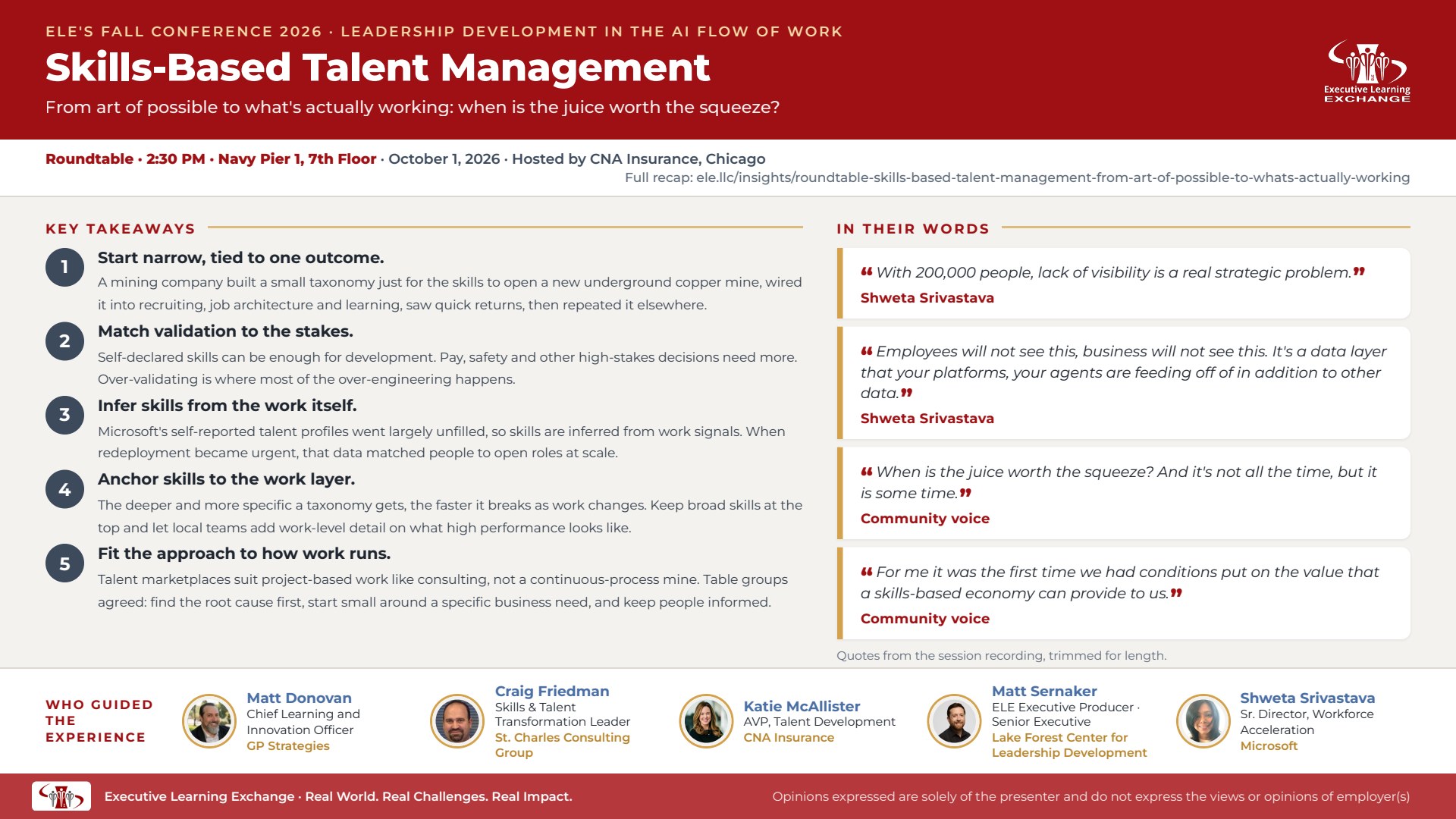
"…the business just wants to identify people and move them. Nobody has time for four to six weeks of requisition, interviews."
Shweta Srivastava
"Can skills data add value to business problems we're trying to solve? Sure. But let's focus on niche problems with a specific business outcome…"
Community voice